Duodenal Atresia. Duodenal atresia is a condition in which the first part of the small bowel (the duodenum) has not developed properly. Duodenal atresia is the most common cause of proximal bowel obstruction in the neonate. Duodenal atresia is one of the most common inborn defects of the intestine that is often associated with other congenital malformations and genetic pathologies, e.g. Duodenal atresia and duodenal stenosis are abnormalities in which there is an absence or complete closure (atresia) in the first part of the small intestines (duodenum) or narrowing (stenosis). Duodenal atresia means that there is a blockage between one part of the duodenum to another. Duodenal atresia results from a congenital malformation of the duodenum and requires prompt correction in the neonatal period. Duodenal atresia can be an isolated condition (which means no other birth defect or condition occurs with it), but is also more common in infants with down syndrome (trisomy 21). Also known as duodenojejunal atresia. Duodenal atresia is an embryopathy of the cranial intestine that leads to a complete absence of the the incidence of duodenal atresia is between 1/10,000 and 1/6,000 live births, with an approximately. The atresia obstructs near the ampulla of vater and. Duodenal atresia is a complete occlusion or absence of the duodenal lumen, whereas duodenal stenosis refers to an incomplete obstruction caused by narrowing. Often, duodenal atresia is seen on ultrasound performed on a pregnant mother to check on her baby. It is not open and cannot allow the passage of stomach contents. It is thought to be the result of an error in bowel canalisation. Duodenal atresia can be defined as a congenital problem, in which a part of the duodenum lumen is absent or completely closed.
Duodenal Atresia . Often, Duodenal Atresia Is Seen On Ultrasound Performed On A Pregnant Mother To Check On Her Baby.
Duodenal Atresia Radiology Case Radiopaedia Org. Duodenal atresia can be an isolated condition (which means no other birth defect or condition occurs with it), but is also more common in infants with down syndrome (trisomy 21). Duodenal atresia is the most common cause of proximal bowel obstruction in the neonate. Duodenal atresia means that there is a blockage between one part of the duodenum to another. Also known as duodenojejunal atresia. Duodenal atresia and duodenal stenosis are abnormalities in which there is an absence or complete closure (atresia) in the first part of the small intestines (duodenum) or narrowing (stenosis). The atresia obstructs near the ampulla of vater and. Duodenal atresia results from a congenital malformation of the duodenum and requires prompt correction in the neonatal period. It is not open and cannot allow the passage of stomach contents. Duodenal atresia can be defined as a congenital problem, in which a part of the duodenum lumen is absent or completely closed. Duodenal atresia is a condition in which the first part of the small bowel (the duodenum) has not developed properly. Duodenal atresia is one of the most common inborn defects of the intestine that is often associated with other congenital malformations and genetic pathologies, e.g. Duodenal atresia is a complete occlusion or absence of the duodenal lumen, whereas duodenal stenosis refers to an incomplete obstruction caused by narrowing. Duodenal atresia is an embryopathy of the cranial intestine that leads to a complete absence of the the incidence of duodenal atresia is between 1/10,000 and 1/6,000 live births, with an approximately. It is thought to be the result of an error in bowel canalisation. Often, duodenal atresia is seen on ultrasound performed on a pregnant mother to check on her baby.
Duodenal atresia has been reported in association with various malformations and syndromes common being down syndrome, malrotation, and annular pancreas.
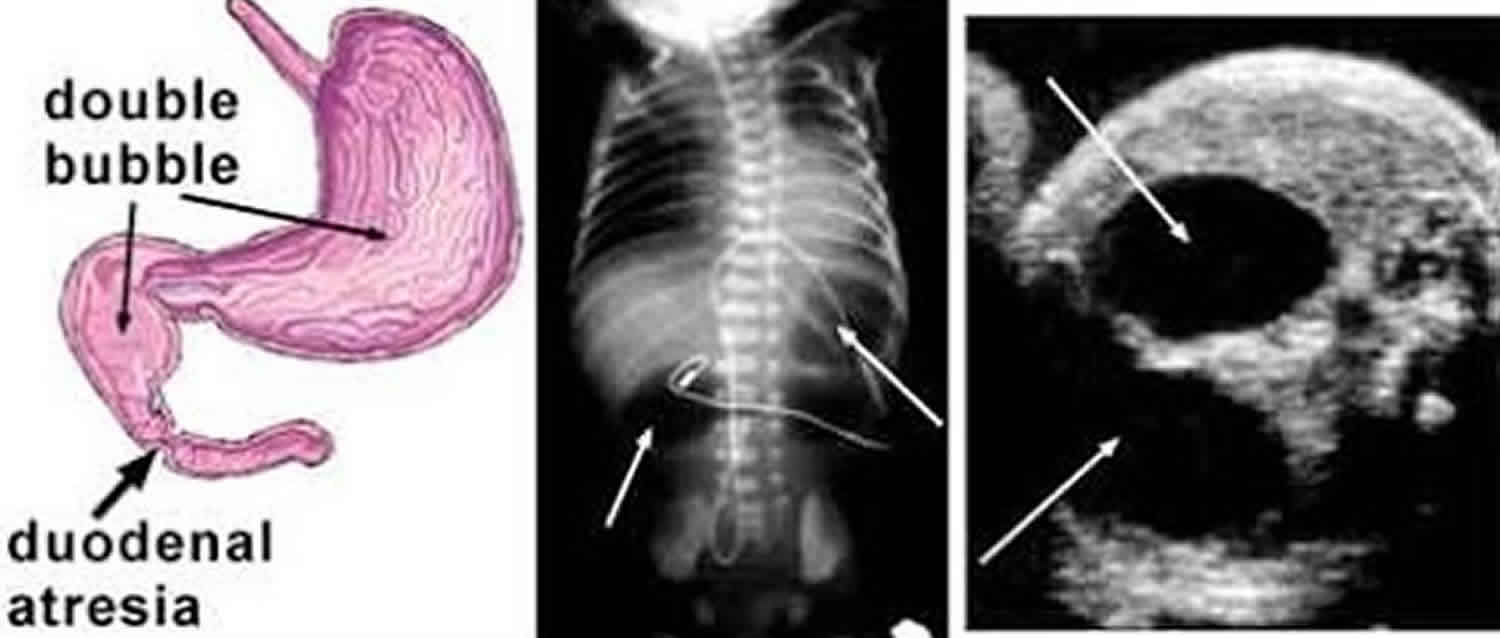
Duodenal atresia, midgut malrotation and volvulus, jejunoileal atresia, meconium ileus and necrotizing enterocolitis are the most common causes of neonatal intestinal obstruction. Often, duodenal atresia is seen on ultrasound performed on a pregnant mother to check on her baby. Fetal abnormalities » gastrointestinal tract. Below is the list of complications and problems that may arise if duodenal atresia is left untreated This is the first portion of the small intestine; Reassessment of treatment and outcome based on antenatal fonkalsrud ew. Duodenal atresia, unlike other intestinal atresias, is commonly associated with other congenital anomalies such as down syndrome, which is present in 25 to 40% of cases. Duodenal atresia (also called duodenal stenosis) is a rare congenital (present at birth) disorder of the duodenum. It is thought to be the result of an error in bowel canalisation. The atresia obstructs near the ampulla of vater and. Duodenal atresia information including symptoms, diagnosis, misdiagnosis, treatment, causes duodenal atresia: Duodenal atresia is an embryopathy of the cranial intestine that leads to a complete absence of the approximately 20 to 30% of infants with duodenal atresia are carriers of trisomy 21, and about 20 to. Duodenal atresia has been reported in association with various malformations and syndromes common being down syndrome, malrotation, and annular pancreas. Duodenal atresia is a complete occlusion or absence of the duodenal lumen, whereas duodenal stenosis refers to an incomplete obstruction caused by narrowing. Duodenal atresia is a condition in which the first part of the small bowel (the duodenum) has not developed properly. Also known as duodenojejunal atresia. Duodenal atresia and duodenal stenosis are abnormalities in which there is an absence or complete closure (atresia) in the first part of the small intestines (duodenum) or narrowing (stenosis). Duodenal atresia results from a congenital malformation of the duodenum and requires prompt correction in the neonatal period. It is not open and cannot allow the passage of stomach contents. Yes, duodenal atresia causes complications if it is not treated. Duodenal atresia is a condition in which the first part of the small bowel (the duodenum) has not developed properly. A rare birth defect where a portion of the small intestine is absent or completely. Duodenal atresia can be an isolated condition (which means no other birth defect or condition occurs with it), but is also more common in infants with down syndrome (trisomy 21). In duodenal atresia the duodenum fails to canalize properly late in the first trimester and a web or several webs occur. The duodenum is the first portion of the small intestine that receives contents emptied from the stomach. Read more about symptoms, diagnosis, treatment, complications. Duodenal atresia is a congenital disorder in which the top section of the small intestine is completely blocked because of a physical deformity. 'double bubble' sign as a result of an enlarged stomach and duodenal cap. Duodenal atresia is one of the most common inborn defects of the intestine that is often associated with other congenital malformations and genetic pathologies, e.g. Duodenal atresia can be defined as a congenital problem, in which a part of the duodenum lumen is absent or completely closed. Duodenal atresia, midgut malrotation and volvulus, jejunoileal atresia, meconium ileus and necrotizing enterocolitis are the most common causes of neonatal intestinal obstruction.
Epos Trade . This Is The First Portion Of The Small Intestine;
Elva S Birth Story Down Syndrome Duodenal Atresia And Prematurity. Often, duodenal atresia is seen on ultrasound performed on a pregnant mother to check on her baby. Duodenal atresia is a condition in which the first part of the small bowel (the duodenum) has not developed properly. Duodenal atresia is the most common cause of proximal bowel obstruction in the neonate. The atresia obstructs near the ampulla of vater and. Duodenal atresia results from a congenital malformation of the duodenum and requires prompt correction in the neonatal period. Duodenal atresia means that there is a blockage between one part of the duodenum to another. Duodenal atresia can be defined as a congenital problem, in which a part of the duodenum lumen is absent or completely closed. It is not open and cannot allow the passage of stomach contents. Duodenal atresia can be an isolated condition (which means no other birth defect or condition occurs with it), but is also more common in infants with down syndrome (trisomy 21). Duodenal atresia is one of the most common inborn defects of the intestine that is often associated with other congenital malformations and genetic pathologies, e.g. Duodenal atresia and duodenal stenosis are abnormalities in which there is an absence or complete closure (atresia) in the first part of the small intestines (duodenum) or narrowing (stenosis). Duodenal atresia is an embryopathy of the cranial intestine that leads to a complete absence of the the incidence of duodenal atresia is between 1/10,000 and 1/6,000 live births, with an approximately. Duodenal atresia is a complete occlusion or absence of the duodenal lumen, whereas duodenal stenosis refers to an incomplete obstruction caused by narrowing. It is thought to be the result of an error in bowel canalisation. Also known as duodenojejunal atresia.
Pediatricimaging Ching 001 Duodenal Atresia Sonography Pathology Ultrasound . The Duodenum Is The First Portion Of The Small Intestine That Receives Contents Emptied From The Stomach.
Duodenal Atresia Html. Duodenal atresia is the most common cause of proximal bowel obstruction in the neonate. Duodenal atresia is one of the most common inborn defects of the intestine that is often associated with other congenital malformations and genetic pathologies, e.g. Often, duodenal atresia is seen on ultrasound performed on a pregnant mother to check on her baby. Duodenal atresia can be an isolated condition (which means no other birth defect or condition occurs with it), but is also more common in infants with down syndrome (trisomy 21). Duodenal atresia means that there is a blockage between one part of the duodenum to another. It is thought to be the result of an error in bowel canalisation. Duodenal atresia is a complete occlusion or absence of the duodenal lumen, whereas duodenal stenosis refers to an incomplete obstruction caused by narrowing. Duodenal atresia results from a congenital malformation of the duodenum and requires prompt correction in the neonatal period. Duodenal atresia and duodenal stenosis are abnormalities in which there is an absence or complete closure (atresia) in the first part of the small intestines (duodenum) or narrowing (stenosis). The atresia obstructs near the ampulla of vater and.
A Case Of Duodenal Atresia With Apple Peel Appearance Challenging The Current Embryology Pathak M Narula D J Clin Neonatol : Duodenal atresia is an embryopathy of the cranial intestine that leads to a complete absence of the approximately 20 to 30% of infants with duodenal atresia are carriers of trisomy 21, and about 20 to.
Duodenal Atresia Www Medicoapps Org. It is thought to be the result of an error in bowel canalisation. The atresia obstructs near the ampulla of vater and. Duodenal atresia can be defined as a congenital problem, in which a part of the duodenum lumen is absent or completely closed. Duodenal atresia can be an isolated condition (which means no other birth defect or condition occurs with it), but is also more common in infants with down syndrome (trisomy 21). Duodenal atresia is one of the most common inborn defects of the intestine that is often associated with other congenital malformations and genetic pathologies, e.g. Duodenal atresia is the most common cause of proximal bowel obstruction in the neonate. Often, duodenal atresia is seen on ultrasound performed on a pregnant mother to check on her baby. Also known as duodenojejunal atresia. Duodenal atresia is a condition in which the first part of the small bowel (the duodenum) has not developed properly. Duodenal atresia means that there is a blockage between one part of the duodenum to another. Duodenal atresia is a complete occlusion or absence of the duodenal lumen, whereas duodenal stenosis refers to an incomplete obstruction caused by narrowing. Duodenal atresia is an embryopathy of the cranial intestine that leads to a complete absence of the the incidence of duodenal atresia is between 1/10,000 and 1/6,000 live births, with an approximately. It is not open and cannot allow the passage of stomach contents. Duodenal atresia and duodenal stenosis are abnormalities in which there is an absence or complete closure (atresia) in the first part of the small intestines (duodenum) or narrowing (stenosis). Duodenal atresia results from a congenital malformation of the duodenum and requires prompt correction in the neonatal period.
Duodenal Atresia Radiology Reference Article Radiopaedia Org : Duodenal Atresia, Midgut Malrotation And Volvulus, Jejunoileal Atresia, Meconium Ileus And Necrotizing Enterocolitis Are The Most Common Causes Of Neonatal Intestinal Obstruction.
Congenital Malformations Of The Gastrointestinal Tract. Duodenal atresia is an embryopathy of the cranial intestine that leads to a complete absence of the the incidence of duodenal atresia is between 1/10,000 and 1/6,000 live births, with an approximately. Duodenal atresia means that there is a blockage between one part of the duodenum to another. Duodenal atresia is the most common cause of proximal bowel obstruction in the neonate. It is not open and cannot allow the passage of stomach contents. It is thought to be the result of an error in bowel canalisation. Duodenal atresia is a condition in which the first part of the small bowel (the duodenum) has not developed properly. Also known as duodenojejunal atresia. Duodenal atresia is a complete occlusion or absence of the duodenal lumen, whereas duodenal stenosis refers to an incomplete obstruction caused by narrowing. Duodenal atresia can be defined as a congenital problem, in which a part of the duodenum lumen is absent or completely closed. Often, duodenal atresia is seen on ultrasound performed on a pregnant mother to check on her baby. The atresia obstructs near the ampulla of vater and. Duodenal atresia results from a congenital malformation of the duodenum and requires prompt correction in the neonatal period. Duodenal atresia can be an isolated condition (which means no other birth defect or condition occurs with it), but is also more common in infants with down syndrome (trisomy 21). Duodenal atresia and duodenal stenosis are abnormalities in which there is an absence or complete closure (atresia) in the first part of the small intestines (duodenum) or narrowing (stenosis). Duodenal atresia is one of the most common inborn defects of the intestine that is often associated with other congenital malformations and genetic pathologies, e.g.
Medpix Case Duodenal Atresia , Duodenal Atresia Has Been Reported In Association With Various Malformations And Syndromes Common Being Down Syndrome, Malrotation, And Annular Pancreas.
Duodenal Atresia Duodenal Stenosis Web Springerlink. Duodenal atresia can be defined as a congenital problem, in which a part of the duodenum lumen is absent or completely closed. Often, duodenal atresia is seen on ultrasound performed on a pregnant mother to check on her baby. It is thought to be the result of an error in bowel canalisation. Duodenal atresia is an embryopathy of the cranial intestine that leads to a complete absence of the the incidence of duodenal atresia is between 1/10,000 and 1/6,000 live births, with an approximately. It is not open and cannot allow the passage of stomach contents. Duodenal atresia and duodenal stenosis are abnormalities in which there is an absence or complete closure (atresia) in the first part of the small intestines (duodenum) or narrowing (stenosis). Duodenal atresia means that there is a blockage between one part of the duodenum to another. Duodenal atresia results from a congenital malformation of the duodenum and requires prompt correction in the neonatal period. Duodenal atresia is a condition in which the first part of the small bowel (the duodenum) has not developed properly. Duodenal atresia is one of the most common inborn defects of the intestine that is often associated with other congenital malformations and genetic pathologies, e.g. Duodenal atresia can be an isolated condition (which means no other birth defect or condition occurs with it), but is also more common in infants with down syndrome (trisomy 21). Duodenal atresia is a complete occlusion or absence of the duodenal lumen, whereas duodenal stenosis refers to an incomplete obstruction caused by narrowing. Duodenal atresia is the most common cause of proximal bowel obstruction in the neonate. Also known as duodenojejunal atresia. The atresia obstructs near the ampulla of vater and.
Duodenal Atresia Radiology Case Radiopaedia Org . Duodenal Atresia, Duodenal Web Or Stenosis, Annular Pancreas, Malrotation Of The Bowel With A Midgut Volvulus , Or Ladd's Bands.
Duodenal Atresia Symptoms In Kids Children S Minnesota. Duodenal atresia is one of the most common inborn defects of the intestine that is often associated with other congenital malformations and genetic pathologies, e.g. Duodenal atresia is the most common cause of proximal bowel obstruction in the neonate. Duodenal atresia means that there is a blockage between one part of the duodenum to another. Duodenal atresia can be an isolated condition (which means no other birth defect or condition occurs with it), but is also more common in infants with down syndrome (trisomy 21). Often, duodenal atresia is seen on ultrasound performed on a pregnant mother to check on her baby. It is not open and cannot allow the passage of stomach contents. Duodenal atresia is a complete occlusion or absence of the duodenal lumen, whereas duodenal stenosis refers to an incomplete obstruction caused by narrowing. Duodenal atresia can be defined as a congenital problem, in which a part of the duodenum lumen is absent or completely closed. It is thought to be the result of an error in bowel canalisation. Duodenal atresia is a condition in which the first part of the small bowel (the duodenum) has not developed properly. Duodenal atresia is an embryopathy of the cranial intestine that leads to a complete absence of the the incidence of duodenal atresia is between 1/10,000 and 1/6,000 live births, with an approximately. The atresia obstructs near the ampulla of vater and. Duodenal atresia results from a congenital malformation of the duodenum and requires prompt correction in the neonatal period. Duodenal atresia and duodenal stenosis are abnormalities in which there is an absence or complete closure (atresia) in the first part of the small intestines (duodenum) or narrowing (stenosis). Also known as duodenojejunal atresia.
Duodenal Atresia - Duodenal Atresia Results From A Congenital Malformation Of The Duodenum And Requires Prompt Correction In The Neonatal Period.
Esophageal Atresia Duodenal Atresia And Imperforate Anus Triple Atresia Panda Ss Srinivas M Bajpai M Sharma N Singh A Baidya Dk Jana M J Clin Neonatol. Duodenal atresia can be defined as a congenital problem, in which a part of the duodenum lumen is absent or completely closed. Also known as duodenojejunal atresia. It is not open and cannot allow the passage of stomach contents. Duodenal atresia is the most common cause of proximal bowel obstruction in the neonate. Duodenal atresia is one of the most common inborn defects of the intestine that is often associated with other congenital malformations and genetic pathologies, e.g. Duodenal atresia means that there is a blockage between one part of the duodenum to another. Duodenal atresia is an embryopathy of the cranial intestine that leads to a complete absence of the the incidence of duodenal atresia is between 1/10,000 and 1/6,000 live births, with an approximately. Duodenal atresia can be an isolated condition (which means no other birth defect or condition occurs with it), but is also more common in infants with down syndrome (trisomy 21). Duodenal atresia results from a congenital malformation of the duodenum and requires prompt correction in the neonatal period. Duodenal atresia is a complete occlusion or absence of the duodenal lumen, whereas duodenal stenosis refers to an incomplete obstruction caused by narrowing. The atresia obstructs near the ampulla of vater and. Duodenal atresia is a condition in which the first part of the small bowel (the duodenum) has not developed properly. Duodenal atresia and duodenal stenosis are abnormalities in which there is an absence or complete closure (atresia) in the first part of the small intestines (duodenum) or narrowing (stenosis). Often, duodenal atresia is seen on ultrasound performed on a pregnant mother to check on her baby. It is thought to be the result of an error in bowel canalisation.
Duodenal Atresia Pancreatic Anomalies From The Sages Video Library , Duodenal Atresia, Midgut Malrotation And Volvulus, Jejunoileal Atresia, Meconium Ileus And Necrotizing Enterocolitis Are The Most Common Causes Of Neonatal Intestinal Obstruction.
Elva S Birth Story Down Syndrome Duodenal Atresia And Prematurity. Duodenal atresia is a complete occlusion or absence of the duodenal lumen, whereas duodenal stenosis refers to an incomplete obstruction caused by narrowing. It is not open and cannot allow the passage of stomach contents. Duodenal atresia is an embryopathy of the cranial intestine that leads to a complete absence of the the incidence of duodenal atresia is between 1/10,000 and 1/6,000 live births, with an approximately. Often, duodenal atresia is seen on ultrasound performed on a pregnant mother to check on her baby. Duodenal atresia results from a congenital malformation of the duodenum and requires prompt correction in the neonatal period. Duodenal atresia can be an isolated condition (which means no other birth defect or condition occurs with it), but is also more common in infants with down syndrome (trisomy 21). Duodenal atresia is a condition in which the first part of the small bowel (the duodenum) has not developed properly. Duodenal atresia is one of the most common inborn defects of the intestine that is often associated with other congenital malformations and genetic pathologies, e.g. Duodenal atresia means that there is a blockage between one part of the duodenum to another. Duodenal atresia can be defined as a congenital problem, in which a part of the duodenum lumen is absent or completely closed. Also known as duodenojejunal atresia. The atresia obstructs near the ampulla of vater and. Duodenal atresia and duodenal stenosis are abnormalities in which there is an absence or complete closure (atresia) in the first part of the small intestines (duodenum) or narrowing (stenosis). Duodenal atresia is the most common cause of proximal bowel obstruction in the neonate. It is thought to be the result of an error in bowel canalisation.
Duodenal Atresia Double Bubble On Radiograph Pediatric Radiology Pediatrics Board Exam : Duodenal Atresia Information Including Symptoms, Diagnosis, Misdiagnosis, Treatment, Causes Duodenal Atresia:
Alobar Holoprosencephaly With Duodenal Atresia A Case Report. Often, duodenal atresia is seen on ultrasound performed on a pregnant mother to check on her baby. Duodenal atresia can be defined as a congenital problem, in which a part of the duodenum lumen is absent or completely closed. The atresia obstructs near the ampulla of vater and. Duodenal atresia is one of the most common inborn defects of the intestine that is often associated with other congenital malformations and genetic pathologies, e.g. It is thought to be the result of an error in bowel canalisation. Duodenal atresia results from a congenital malformation of the duodenum and requires prompt correction in the neonatal period. Duodenal atresia is an embryopathy of the cranial intestine that leads to a complete absence of the the incidence of duodenal atresia is between 1/10,000 and 1/6,000 live births, with an approximately. Duodenal atresia is a complete occlusion or absence of the duodenal lumen, whereas duodenal stenosis refers to an incomplete obstruction caused by narrowing. Duodenal atresia means that there is a blockage between one part of the duodenum to another. Duodenal atresia can be an isolated condition (which means no other birth defect or condition occurs with it), but is also more common in infants with down syndrome (trisomy 21). Duodenal atresia and duodenal stenosis are abnormalities in which there is an absence or complete closure (atresia) in the first part of the small intestines (duodenum) or narrowing (stenosis). It is not open and cannot allow the passage of stomach contents. Also known as duodenojejunal atresia. Duodenal atresia is the most common cause of proximal bowel obstruction in the neonate. Duodenal atresia is a condition in which the first part of the small bowel (the duodenum) has not developed properly.
Medicowesome Duodenal Atresia Notes And Mnemonic : 'Double Bubble' Sign As A Result Of An Enlarged Stomach And Duodenal Cap.
Duodenal Atresia. Duodenal atresia is an embryopathy of the cranial intestine that leads to a complete absence of the the incidence of duodenal atresia is between 1/10,000 and 1/6,000 live births, with an approximately. Duodenal atresia can be defined as a congenital problem, in which a part of the duodenum lumen is absent or completely closed. Duodenal atresia is one of the most common inborn defects of the intestine that is often associated with other congenital malformations and genetic pathologies, e.g. Duodenal atresia results from a congenital malformation of the duodenum and requires prompt correction in the neonatal period. Duodenal atresia is a complete occlusion or absence of the duodenal lumen, whereas duodenal stenosis refers to an incomplete obstruction caused by narrowing. The atresia obstructs near the ampulla of vater and. Duodenal atresia means that there is a blockage between one part of the duodenum to another. It is thought to be the result of an error in bowel canalisation. Duodenal atresia and duodenal stenosis are abnormalities in which there is an absence or complete closure (atresia) in the first part of the small intestines (duodenum) or narrowing (stenosis). Also known as duodenojejunal atresia. Duodenal atresia can be an isolated condition (which means no other birth defect or condition occurs with it), but is also more common in infants with down syndrome (trisomy 21). It is not open and cannot allow the passage of stomach contents. Often, duodenal atresia is seen on ultrasound performed on a pregnant mother to check on her baby. Duodenal atresia is a condition in which the first part of the small bowel (the duodenum) has not developed properly. Duodenal atresia is the most common cause of proximal bowel obstruction in the neonate.
